
Interprofessional Education (IPE) Training
Interprofessional Education (IPE) at CHHS
Transforming Health Professions Education
In 2024, the College of Health and Human Services (CHHS) established the Interprofessional Education (IPE) Task Force to bring students from across clinical disciplines together to learn, practice, and solve problems as a team. By working collaboratively, students gain the skills needed to meet the demands of today’s complex health and human services environments.
Why It Matters
Health care today is built on collaboration. When nurses, physical therapists, athletic trainers, speech-language pathologists, and other professionals train together, they are better prepared to deliver safe, effective, and patient-centered care.
Through IPE, CHHS students learn to:
- Communicate effectively across professions
- Deliver safer, higher-quality patient and client care
- Thrive in team-based health care environments
Graduate Student IPE Training
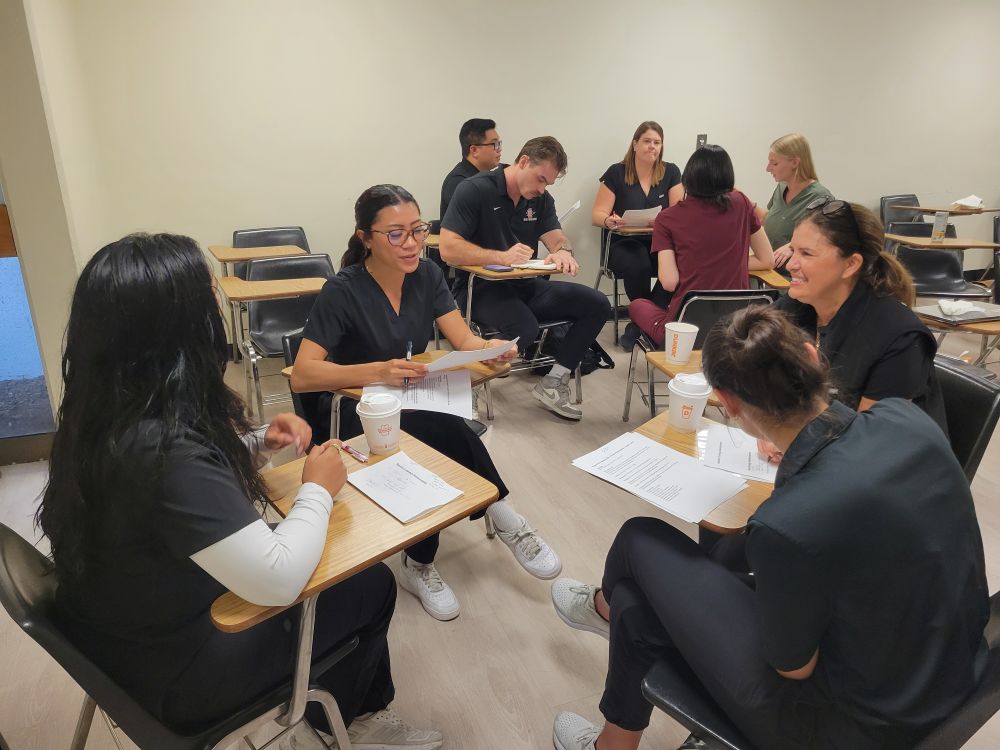
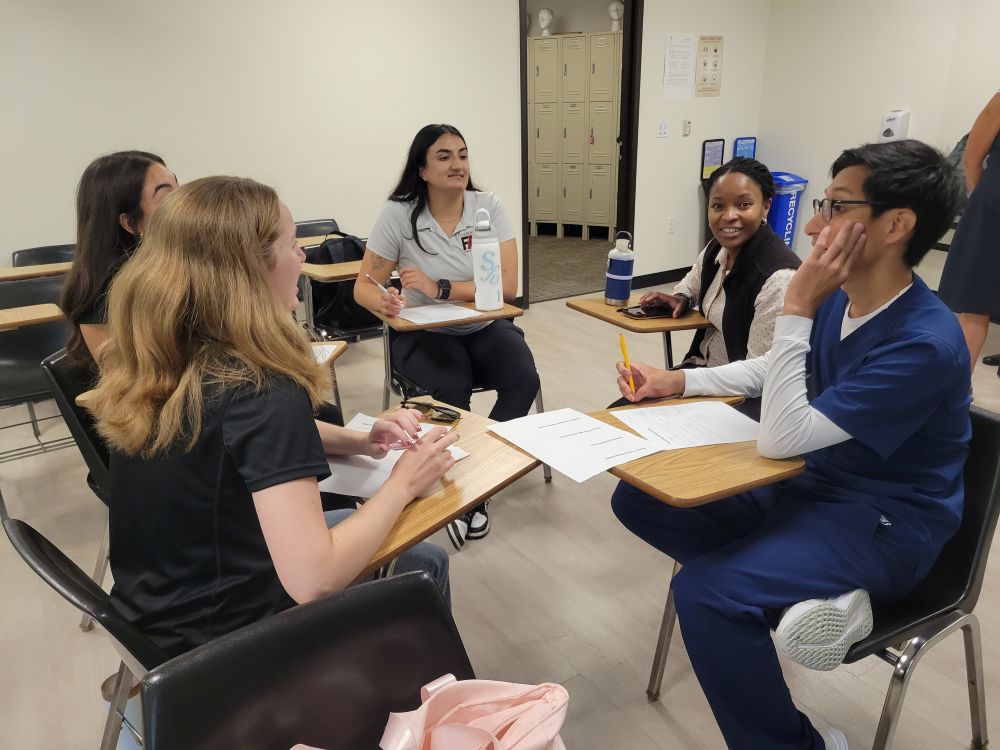
In 2025–2026, CHHS launched a three-semester Graduate Interprofessional Education (IPE) Training Program that brings together graduate students from Nursing, Physical Therapy, Athletic Training, Speech-Language Pathology, Audiology, and Social Work. Program content is aligned with the Interprofessional Education Collaborative (IPEC) Core Competencies.
Through our overarching program approach, students:
- Learn together in online and in-person settings about teamwork, communication, and professional roles.
- Collaborate on case-based learning activities to develop interprofessional care plans.
- Participate in simulation experiences with standardized patients in realistic clinical scenarios.
What distinguishes the CHHS Graduate IPE Training Program is that interprofessional education is integrated throughout the graduate curriculum rather than delivered as a standalone course or module. This longitudinal approach ensures that students develop and apply interprofessional competencies throughout their graduate education.
In this regard, students who participate in the program:
- Complete training aligned with the IPEC Core Competencies.
- Experience IPE content integrated throughout their graduate coursework.
- Engage in interprofessional case-based learning.
- Participate in college-wide interprofessional learning events focused on complex patient cases.
- Receive mentorship opportunities from students who have completed the program.
- Participate in additional experiential learning opportunities.
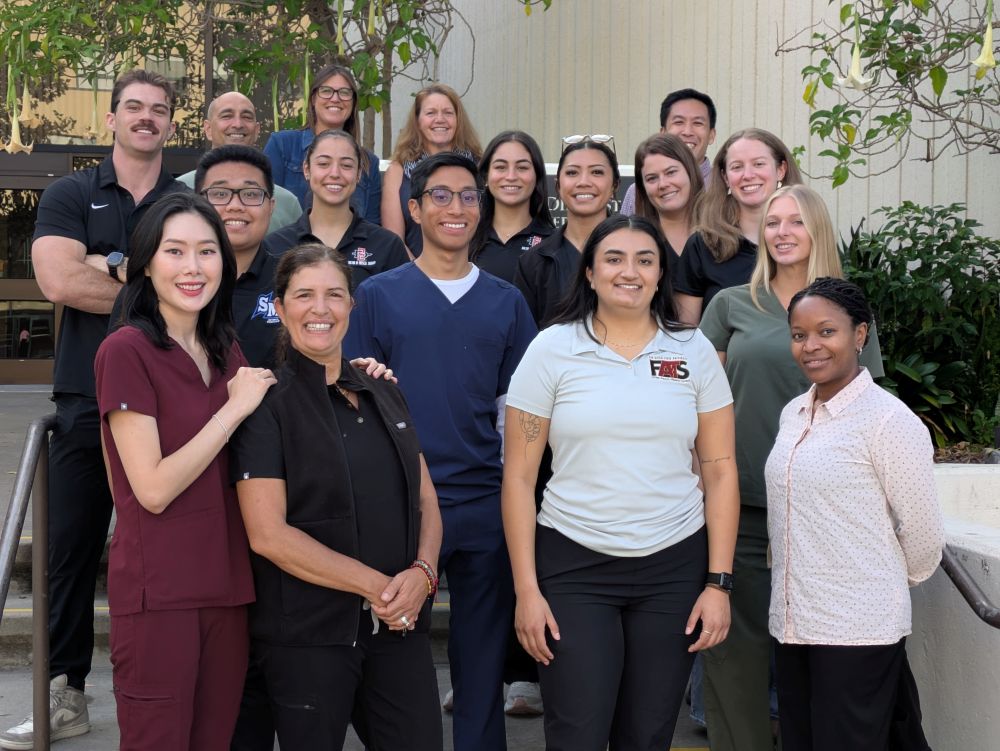
The program began with a pilot cohort of 14 students, and beginning in Fall 2026, enrollment will exceed 200 students across Nursing, Physical Therapy, Athletic Training, Speech-Language Pathology, Audiology, and Social Work.
A detailed summary of the pilot is here.
To learn more or get involved, contact Peter Torre (IPE Task Force Chair).Undergraduate Student Interdisciplinary Training
Starting in Fall 2027, CHHS will offer a minor in Integrated Health and Human Services. This program is designed for students pursuing careers that rely on cross-disciplinary teamwork, including healthcare administration, medical device engineering, and related fields. For more information or to enroll, contact CHHS Advising.

Peter Torre, PhD
Professor, School of Speech, Language and Hearing Sciences
IPE Task Force Members:
- Angela Bencke, Lecturer, School of Nursing
- Kimberly Detwiler, Lecturer and Clinical Coordinator, Athletic Training, School of Exercise and Nutritional Sciences
- Margo Greicar, Lecturer and Program Director, Athletic Training, School of Exercise and Nutritional Sciences
- Amanda Lee, Lecturer and Director of Field Education, School of Social Work
- Ignatius Nip, Professor and Director, School of Speech, Language, and Hearing Sciences
- Brenda O'Day, Lecturer, School of Exercise and Nutritional Sciences
- Mitchell Rauh, Professor and Director, School of Physical Therapy
Contact Us
SDSU College of Health and Human Services